Designing an interface is easy compared to keeping a 41,000-title database running alone. MuviDB Studio is the internal operating system behind the curtain: local video OCR credit harvesting, Telegram-driven headless moderation, deterministic deduplication, and automated social publishing.
Designed for hiring managers, engineering leads, and evaluators who need the essentials in under two minutes.
A solo founder cannot manually maintain a 41,000-record media database.
Building MuviDB meant indexing thousands of films across multiple eras, but manual catalogue enrichment, credit verification, and social marketing would require a full operations team I couldn't afford.
Standard startup admin dashboards require substantial ongoing engineering maintenance, distracting from consumer product iterations.
Repetitive editorial patterns and unstructured credit data were capping growth.
Observing early operations revealed high-friction bottlenecks:
Engineered headless Telegram ops, local OCR pipelines, and deterministic merge tooling.
Transformed operational bottlenecks into automated, human-in-the-loop systems:
Single-operator sustainability across 41,000+ films with zero ongoing admin UI overhead.
Reduced administrative time from 20+ hours a week of manual data entry to a few daily taps on Telegram.
Cut infrastructure and bandwidth costs by >80% through Cloudflare R2 and Supabase storage separation.
Demonstrated that design engineering extends beyond public screens into operating model sustainability.
What this leaves out (intellectual honesty).
OCR extraction requires clean source video; low-resolution legacy VHS transfers still require manual human transcription.
Automating social publishing eliminated a contracted marketing role—a commercially necessary trade-off that is not framed as an unalloyed win.
The Telegram bot is private and scoped to founder operations, not designed for large multi-tenant moderation teams.
Making African screen history easier to discover and harder to lose
I first saw this gap in 2021, designing the NFVCB licensing portal: Nigerian screen work was being produced far faster than it was being recorded. An actor’s career can span stage, home video, cinema, streaming and YouTube while the record of that work remains fragmented. MuviDB connects productions, people, credits, companies and availability into a living record of the industry that made them.
 03 · 2024–2026
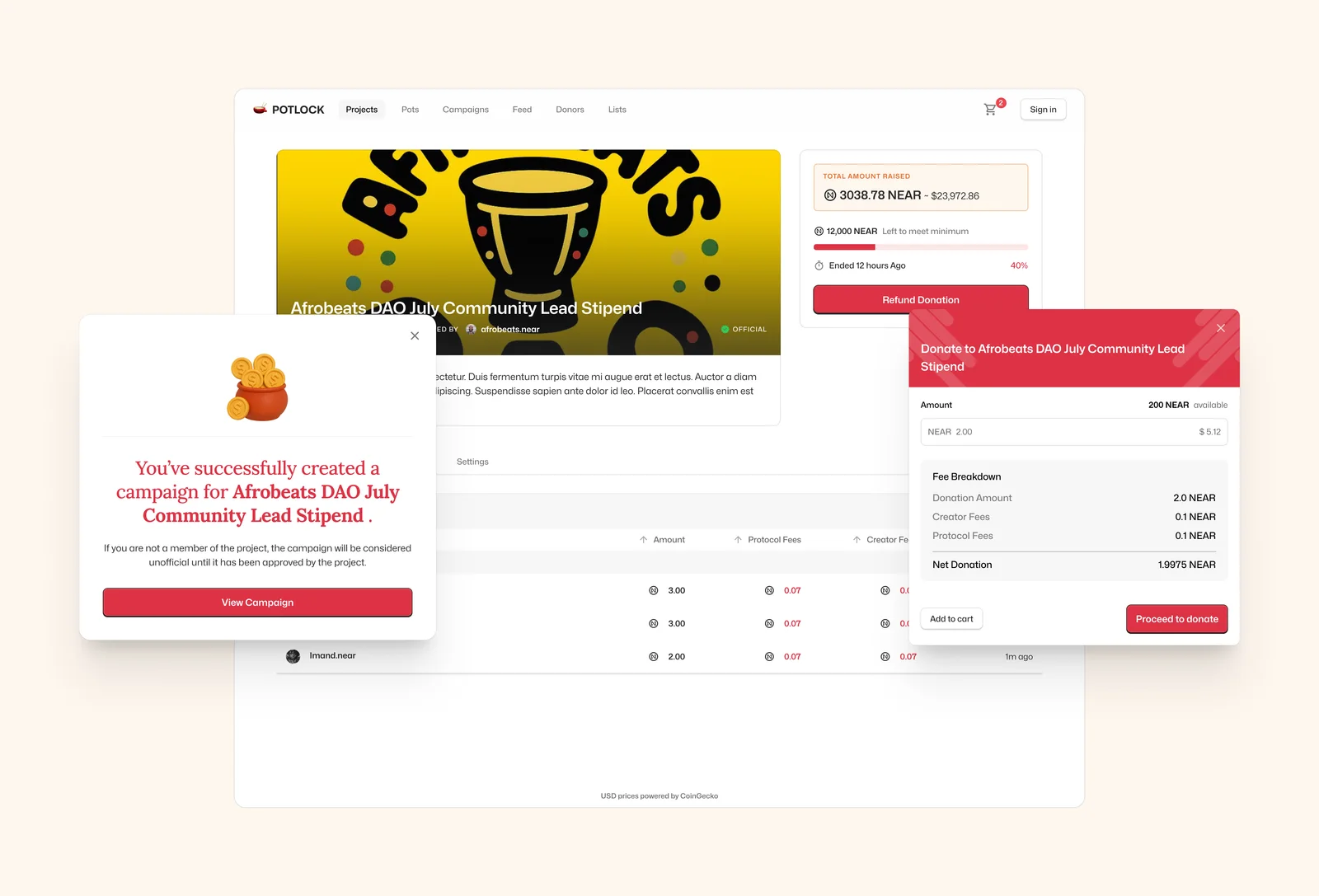
Expanding Web3 public-goods infrastructure into a fundraising product that projects and causes could understand.
Potlock started with Web3 public-goods funding. I helped shape Campaigns as a more familiar fundraising path, clarify the financial rules underneath it, and focus delivery on the opportunities with validated demand.
 04 · 2021
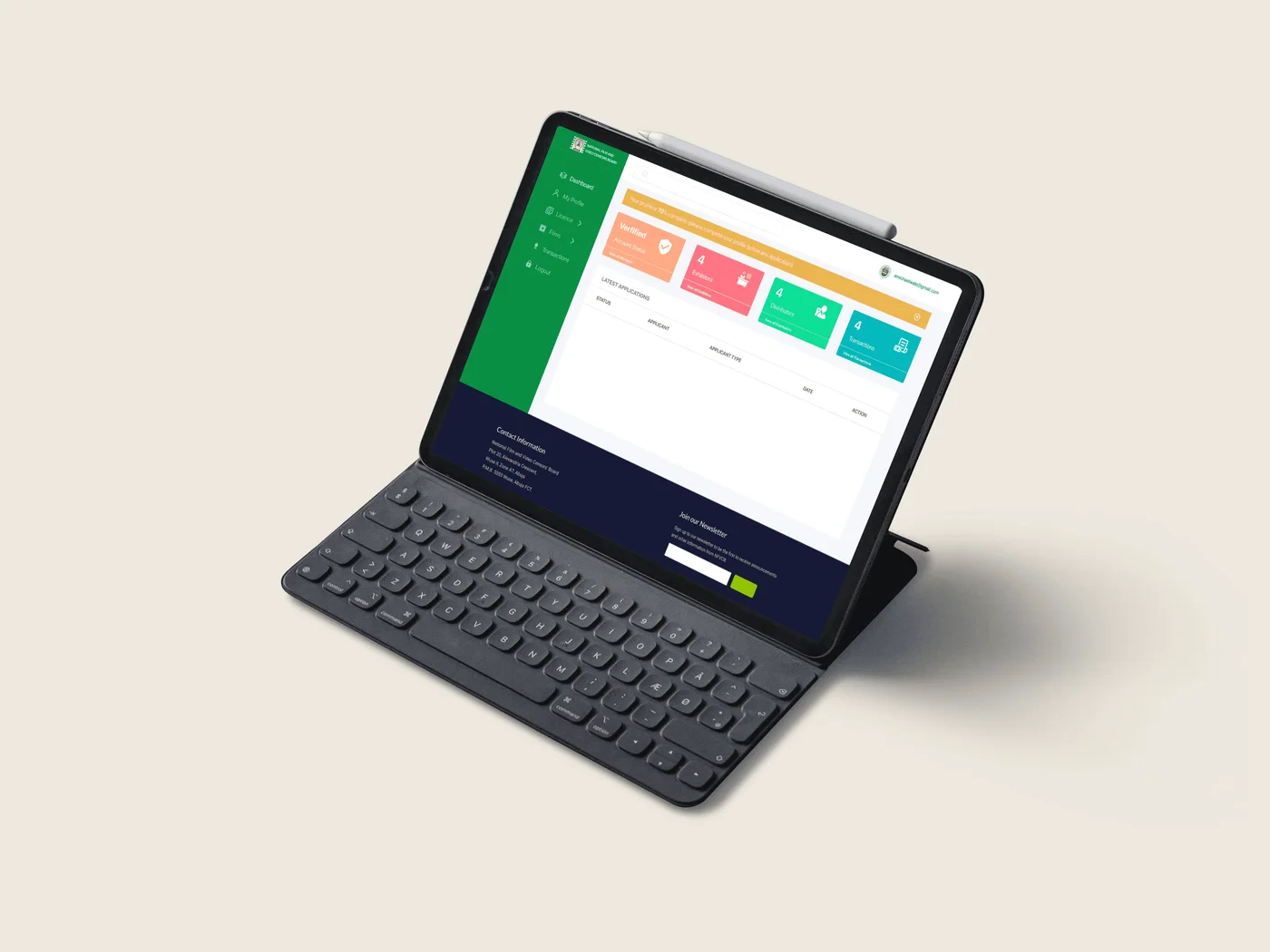
Turning complex regulatory workflows into digital services.
NFVCB asked us to put their forms online. Research with applicants and the staff who process them showed a service with four groups, several layers of approval and renewal cycles measured in years. Then usability testing took apart the way we had built the front door.
